Technology & Realization; Creativity & Aesthetics; Math, Data & computing, User & Society; Business & Entrepreneurship
Main insights:
3D modelling, Physical prototyping, Circularity, Presenting
Process
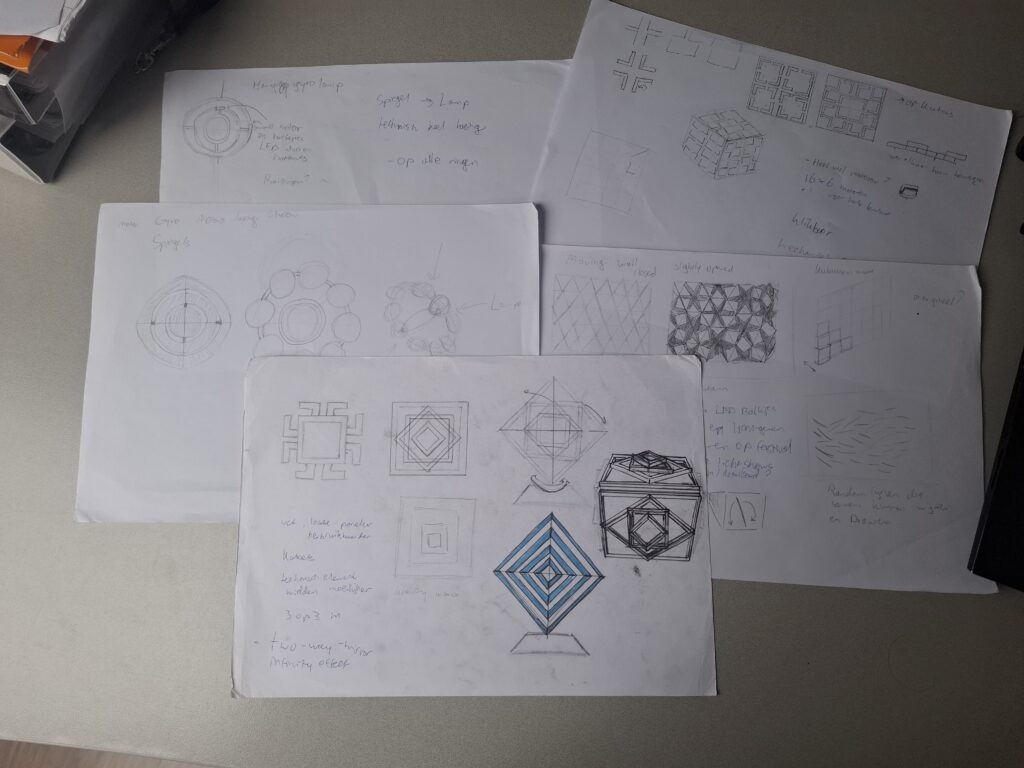
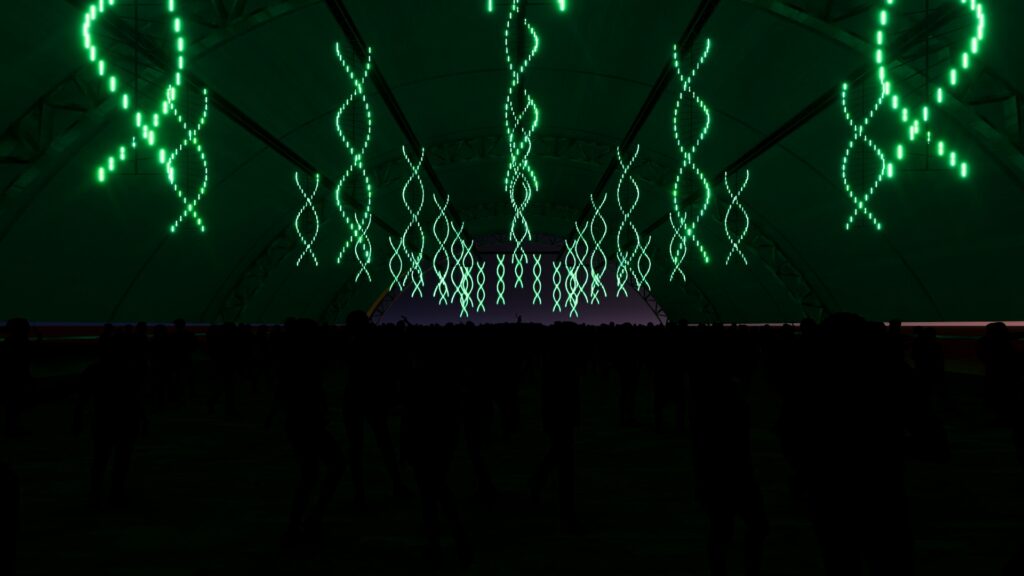
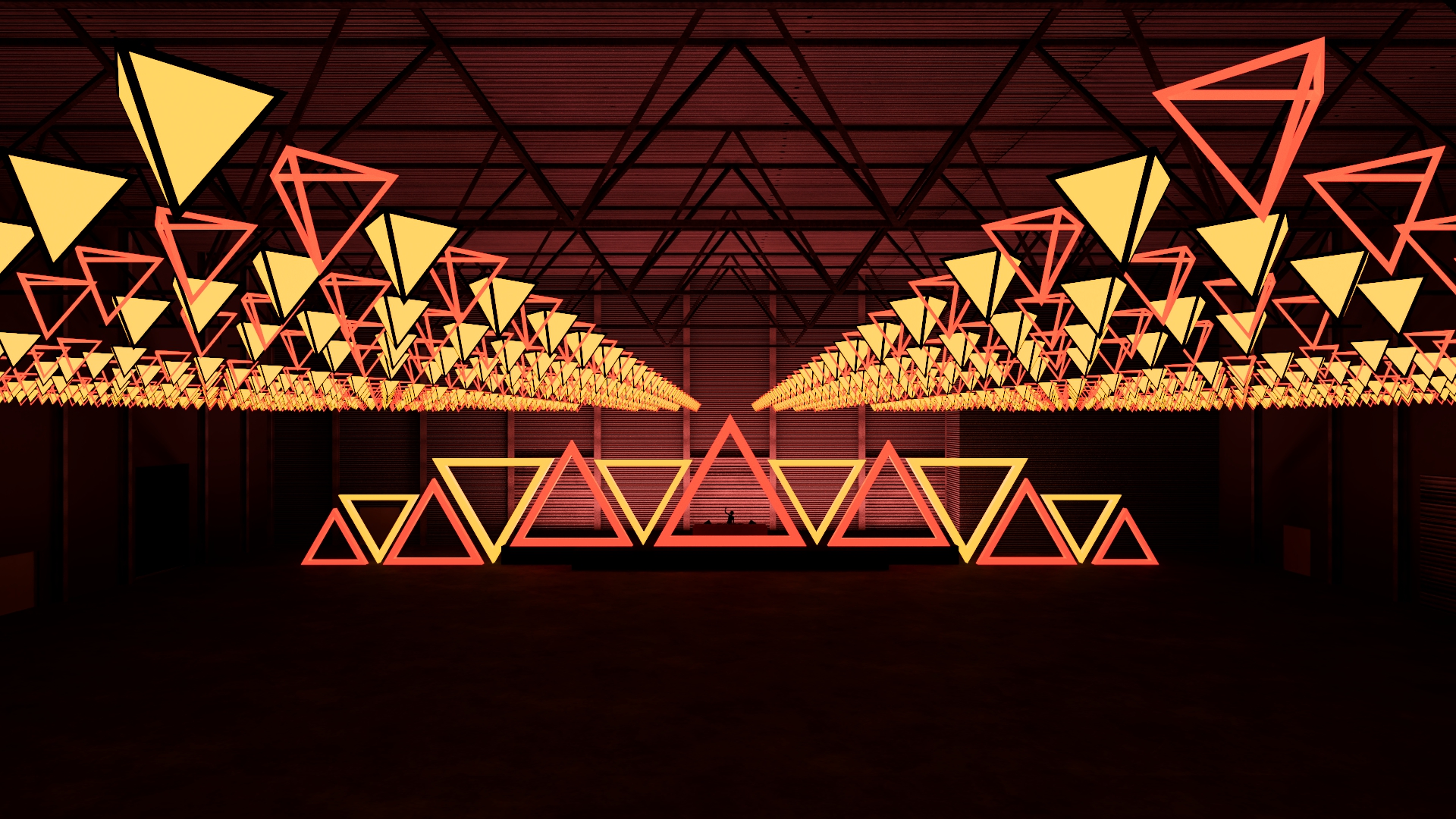
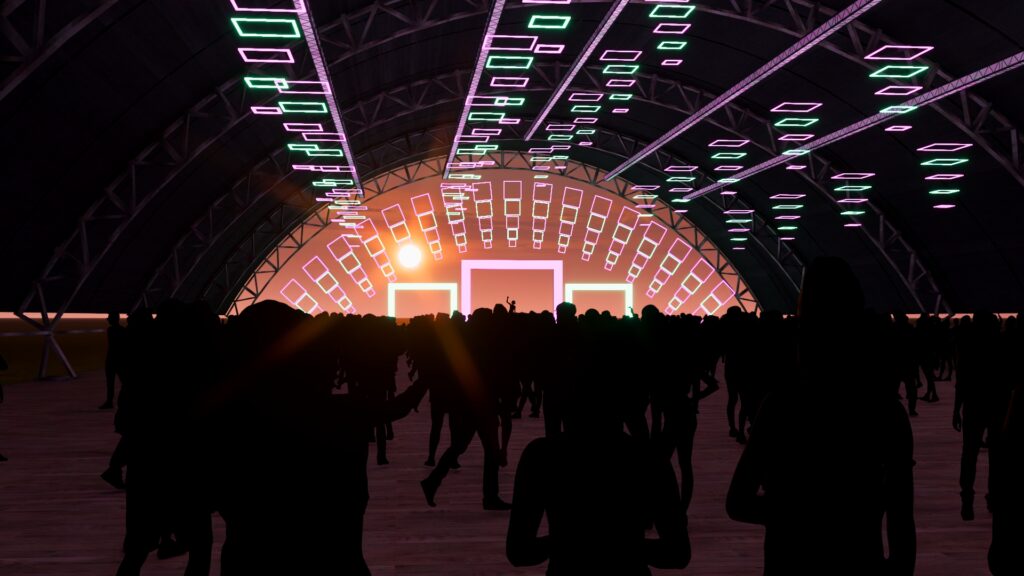
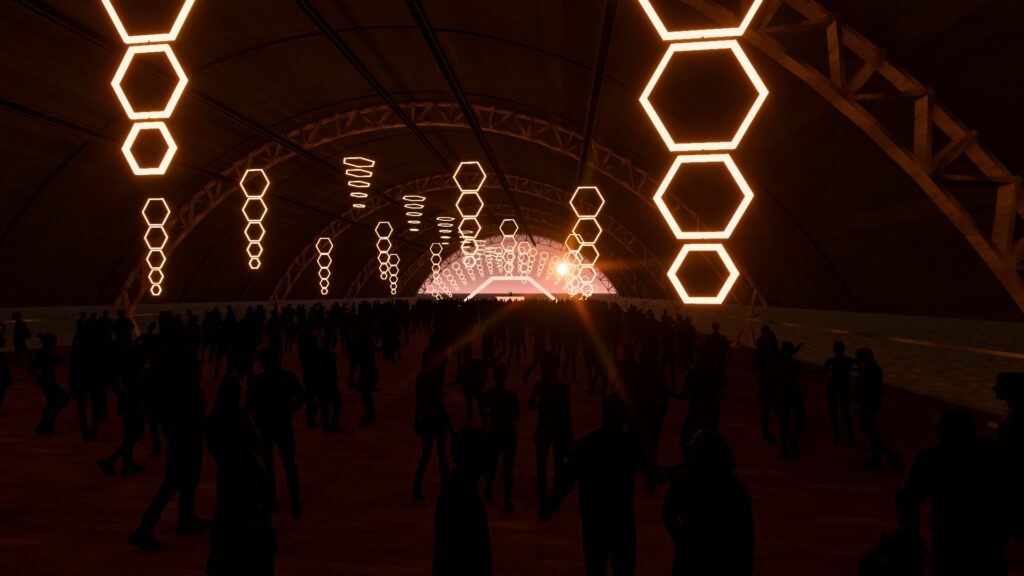
With the project description to create a reusable decorative unit, which can be deployed at various events or festivals, I wanted to create a multisensorial experience with sound, light and dynamics, while being reusable and applying a circular approach to the design. The project started with brainstorming through Exploratory sketching (Gallagher, 2017), and later concepts were elaborated into 3D models, visualizations and low-fidelity prototypes.
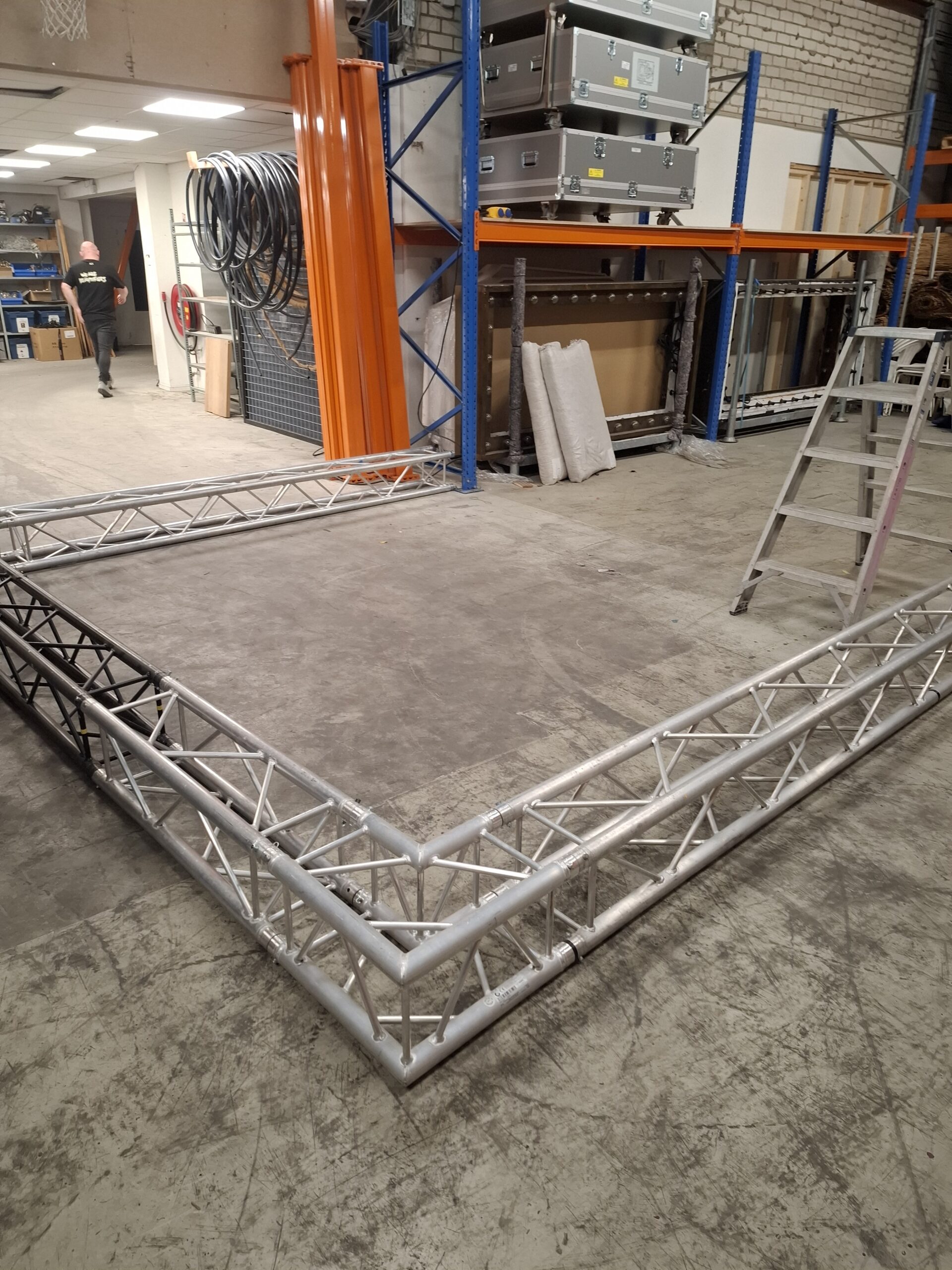
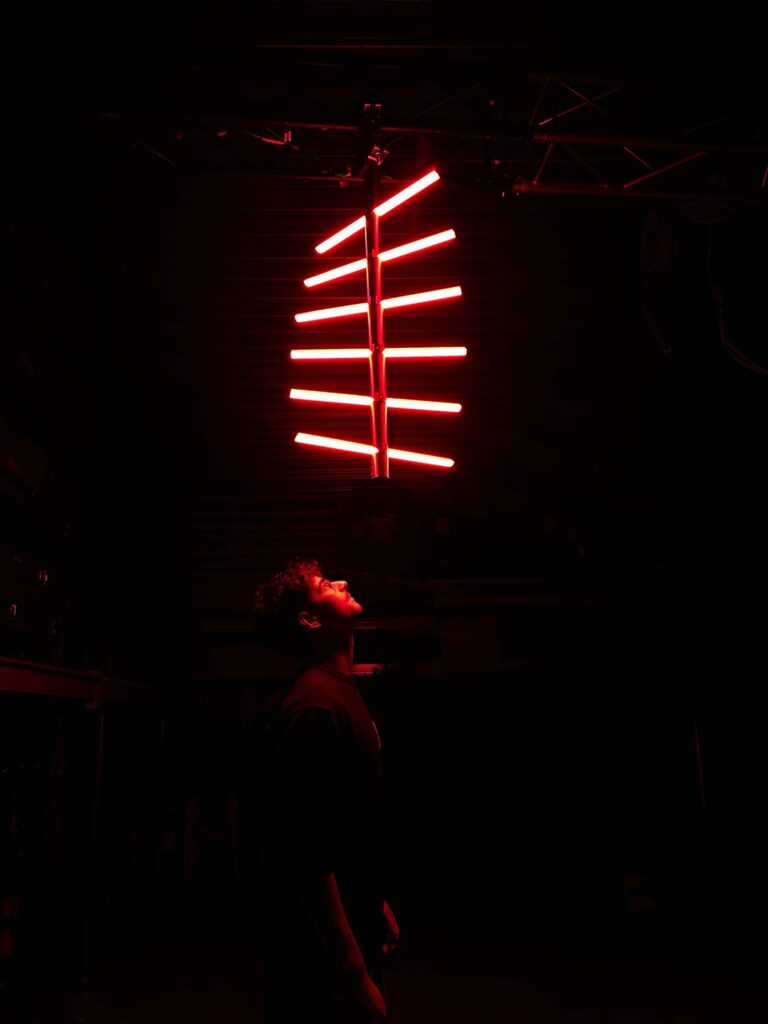
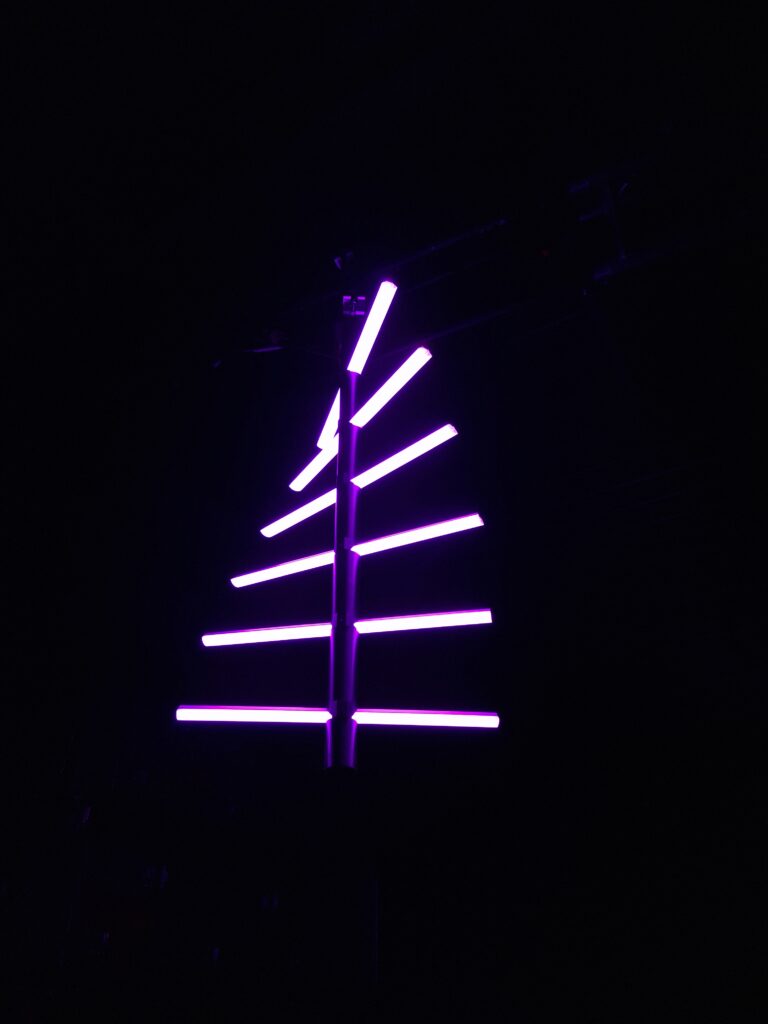
The spiral lamp was preferred and I elaborated this concept into the final prototype, made from 3D printed parts, and reused LED strips and cables. I set up a truss frame to present the final design and I made a budget plan for production.
Reflection
For production the design should include; metal central parts, custom laser-cut by an external party, and pre-produced and connected LED strips circuits by an external party, for more secure and steady connections. This version would be twice the size of the current prototype, for a full 360 degrees spiral effect. A produced version could also include twisting, an additional cool effect, obtainable by using a motor, but this requires new components like a slip ring and design of a custom mounting system.
With this project I further developed my technical skills, with 3D modelling in both SketchUp and Fusion360. With making the many visualizations and animations of different concepts I also developed 3D rendering skills with Lumion. These hard skills will strengthen my future 3D models and visualizations. The 3D rendering skills equip me to enhance future presentations with high-quality visualizations of my concepts. Additionally, the project enhanced my physical prototyping skills, working with electronics, power-tools and materials. All these developments strengthened my development across all expertise areas.
References
Gallagher, C. L. (2017). Sketching for ideation: A structured approach for increasing divergent thinking. In Proceedings of the 2017 CHI Conference Extended Abstracts on Human Factors in Computing Systems (CHI EA ’17). Association for Computing Machinery, New York, NY, USA., 106–111. https://doi.org/10.1145/3027063.3048424